

3:7
Tradition, joy, and the spectacle of somaek

As mentioned in our last event wrap-up, Korean drinking culture is driven into the language—one of the main reasons we decided to build out an entire evening around the concept of the “golden ratio.”

One great portmanteau in the Korean language is somaek (soju + maekju), and when enjoyed at a 3:7 ratio it makes for a really tasty mix of spirit & beer.
Soju is traditionally made with rice, water, and nuruk, a yeast & bacteria-laden starter used in makgeolli (or takju) brewing, which settles and separates (more on that another time). Distill the lighter liquid that settles on top (yakju) and you have soju. Nowadays, most sojus aren’t made through this process but rather are comprised of a neutral base spirit combined with various sweeteners and/or flavorings and tend to hit wine-like alcohol levels (12-15%), but it isn’t unheard of to see soju ABVs ticking all the way up to 20%, and if you go back in time far enough you can find sojus around 35% ABV.
Once upon a time, there were several soju producers scattered throughout Korea, but since government’s gonna government, revenue laws came into play and reduced the number of producers to just one per province, leading to a current-day market domination by HiteJinro. There are a number of other soju producers in the country, and as Korean food & beverage culture continues to influence around the globe, a number of small producers1 are beginning to revive traditional soju making.
Korean drinking culture is replete with traditions and rituals. It’s typical to gather regularly with your colleagues for a night of eating and drinking (known as hoesik 회식), bouncing from place to place to improve collegial relationship and promote camaraderie…at least, that’s the intention. The practice of hoesik has come under some scrutiny in recent years, with some detractors considering it an old-school practice that reinforces hierarchy at best and creates a dangerous environment for subordinates at worst. There’s also a generational divide emerging, as younger workers have reported less interest in hoesik than older generations in some public polls. It’s not my place to opine on the effectiveness or relevancy of hoesik, but I can speak from experience that working in a place where colleagues spend some amount of time together outside of the office has, for the most part, made me enjoy those workplaces more than those that did not. I also recognize the power dynamics at play when leadership is demanding that the lower-ranking members of the office stay out drinking all night.
“The Korean culture of drinking can be considered one of the collective cultures wherein every participant would drink alcoholic drinks together in perfect order.”
Profs. Ko Seung-duk, Hyupsung University & Sohn Ae-ree, Sahmyook University
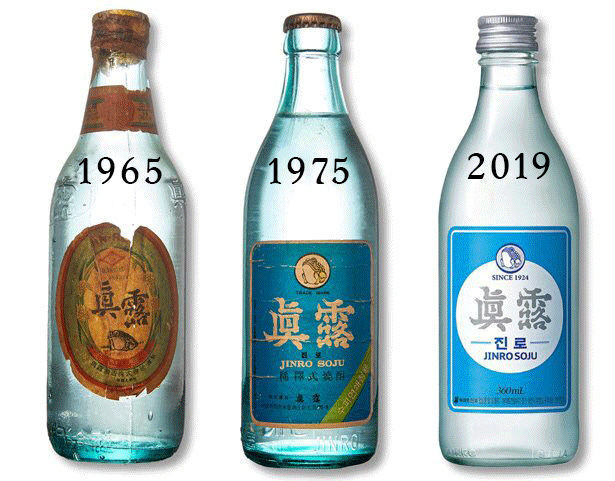
At a hoesik, it’s common to consume a lot of soju throughout the night, which carries its own traditions. Consider the soju bottle: most of the brands you’ll find on the shelf come in a 375mL bottle sealed with a twist-off cap. Corks used to be standard, and anyone familiar with an old or dried-out cork can relate to the experience of having bits of cork fall into your bottle. Bummer. Enter: the soju tornado.
 Tiktok failed to load.
Enable 3rd party cookies or use another browser
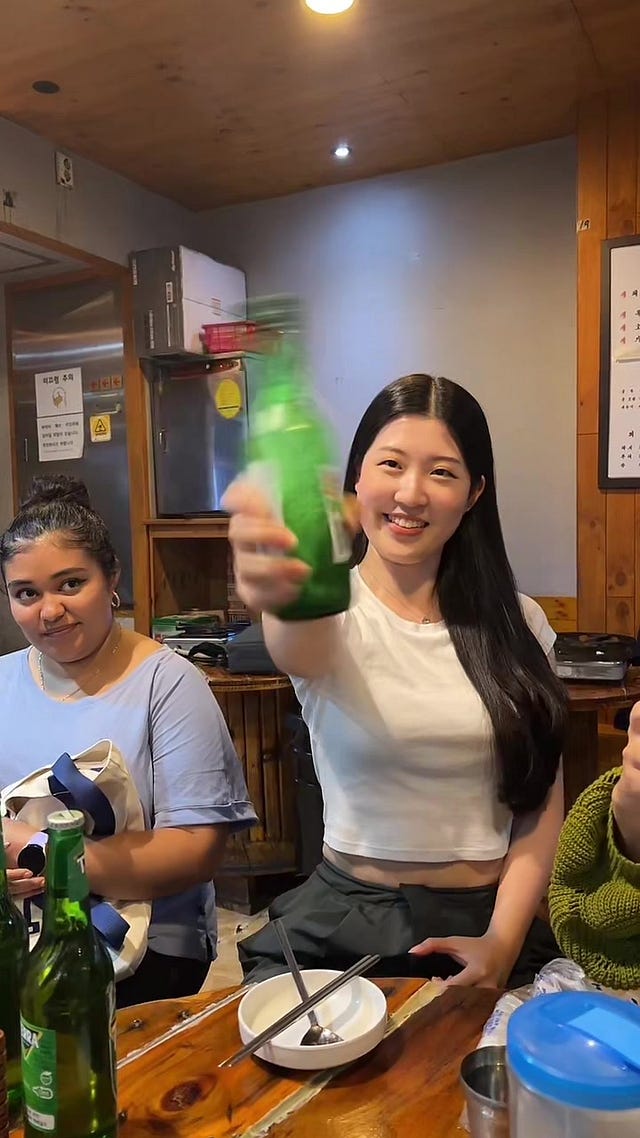
As soju has gained popularity worldwide, social media has been flooded with videos of people attempting various soju tricks like the tornado video above. This one’s a classic—you rotate the bottle quickly to build a vortex that pulls any cork bits into the center, causing them to float to the neck, which you can then flick out of the bottle2. Obviously a twist-off bottle won’t have any cork in it, but hey, it still looks cool. I highly, highly recommend browsing the video-based social media app of your choice for #sojutricks and losing some time down the rabbit hole.
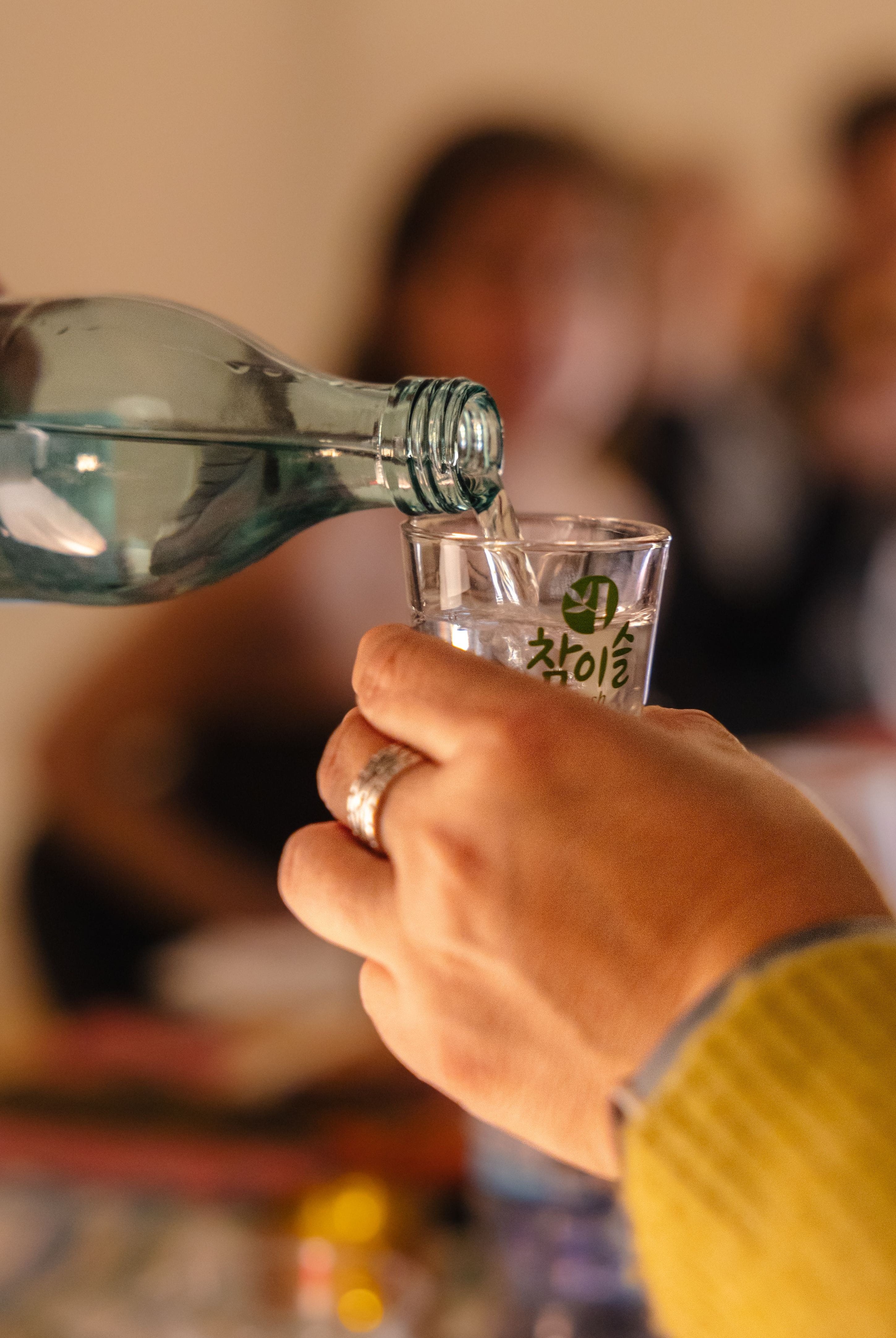
Another soju-drinking custom everyone taking the first pour together as a shot to kick off the festivities (this chapter was aptly named ONE SHOT at The Golden Ratio). Beyond the ceremonial first soju, the eldest person (thinking back to hoesik—this is probably the boss or most senior member of the team present) is expected to handle keeping everyone’s glass full and everyone else is expected to receive their pour with two hands, averting their eyes as they receive and drink as a show of respect. All of this works out great if you’re in a group, but what if you’re on your own?
In 2020 the Korean beverage producer HiteJinro released a soju dispenser featuring their mascot, a cute toad3 named Dukkeob. This little device made it possible to follow the tradition of not pouring your own shot. Dukkeob’s got your back:
Finally, somaek. In the video above, notice the various measurement lines on my (well-used) glass. These lines show liquid levels for both beer and soju with their respective, approximate ABV (for example, 60mL soju with 107mL beer ≈ 9.7% ABV). The so-called Golden Ratio is 3 parts soju to 7 parts beer, but as with any “rule” in beverage, drink what you like. Tradition also dictates that you need to mix the two for even enjoyment throughout the duration. Here come more soju tricks:
Any time I come across a video of the woman above, I stop scrolling. She’s a legend, and always turns the spectacle of somaek into an all-out performance.
I hope you can join us for the next iteration of Bier Omakase…
…because on Thursday, March 6 at 6pm, we’re presenting the Class of 88.
As paying subscribers, you get first dibs. This link will go live to all subscribers on Friday (2/14), and out into the world via social media next week.
Hana Makgeolli in Brooklyn makes a really delicious yakju and once made a 60% ABV soju 🤯 PS, hi Alice, we are huge fans of yours.
This video (TikTok) shows each step pretty clearly.